During an official visit to Nicosia, WFTGA President Emeritus Titina guided Ursula von der Leyen, President of the European Commission, together with Nikos Christodoulides, President of the Republic of Cyprus, along the ceasefire line.
Cyprus is not a post-conflict destination. The division of the island remains a lived reality. Guiding in such a place requires care, experience and restraint. It is not about delivering opinions, but about helping visitors understand context clearly, calmly and with respect.
WFTGA is regularly approached in connection with delegations and institutional visits. We are also in dialogue with partners and networks linked to the EU, UNESCO-related initiatives and UN Tourism. In all these settings, the same question arises: how can guiding meet its public responsibility?
Training, Regulation and Professional Responsibility
From WFTGA’s perspective, ethical guiding is only possible where the profession is properly trained, regulated and licensed. Standards cannot be maintained on goodwill alone.
Professional guiding is not just knowledge of history. It is a practice. It includes group management, communication skills, conflict awareness, and the ability to handle emotionally sensitive topics without escalation. It also requires an understanding of people – not only of facts.
Cyprus plays a special role in this context. The WFTGA International Training Centre (ITC) has, for many years, supported guides in developing exactly these practical skills. It stands for applied training, professionalism and quality—especially valuable in regions shaped by complex histories.
Keeping Dialogue Open
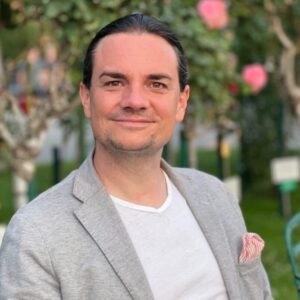
Sebastian Frankenberger, President of WFTGA, said:
“Tourist guides are bridge builders. Our members come from regions that may be politically opposed, but within WFTGA we keep the professional dialogue open. Even when politicians struggle to speak to each other, guides must remain able to do so. This also means being very clear: guides do not deliver propaganda, and guide associations must not become political tools. Our work is based on respect for human rights, human dignity and professional integrity. That ethical responsibility is why we invest so much in training and why we are currently revising our Code of Guiding Practice to ensure it reflects today’s realities and supports guides in their daily work.”
The visit in Nicosia shows what professional guiding can mean in practice: calm, well-prepared and responsible interpretation, grounded in training, standards and mutual respect.